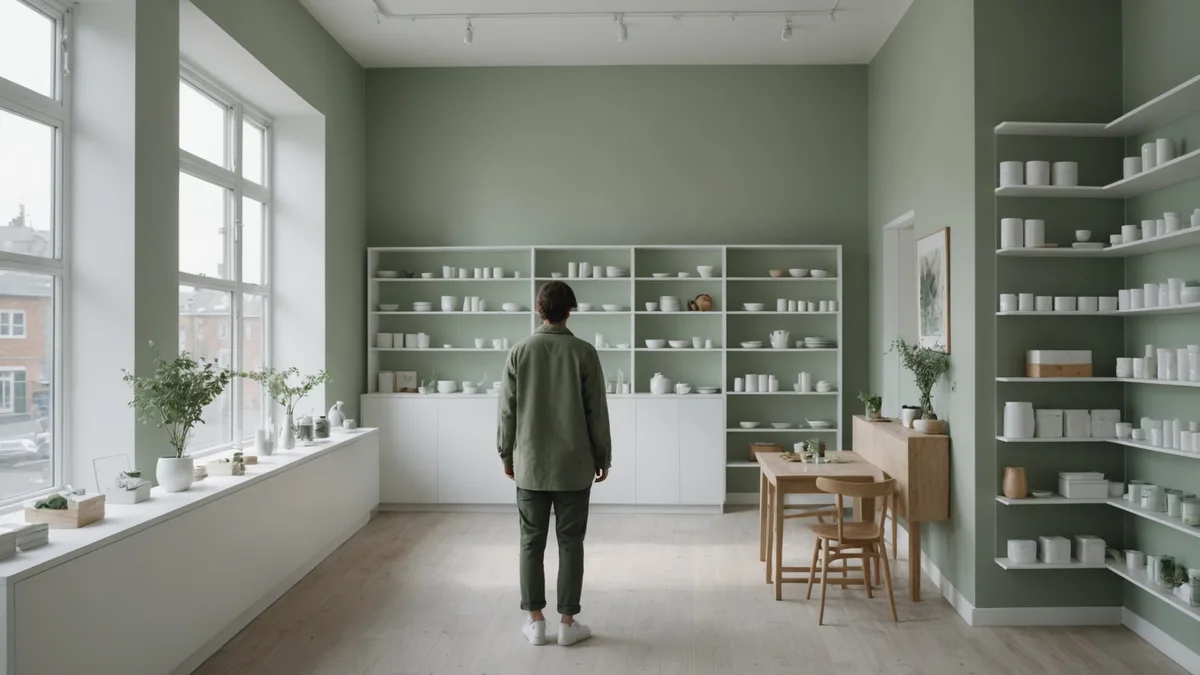
The phrase we use internally at Curated For You is "one store per shopper." It sounds like a marketing line. It is actually a design constraint.
Once you commit to the idea that every visitor should see a meaningfully different version of your storefront, a lot of conventional e-commerce decisions stop making sense. Why do you have a single featured product row? Why does your homepage hero promote the same item to everyone who visits this week? Why is your Jackets category sorted the same way for the person who buys lightweight running gear as for the person who buys heavy wool outerwear?
These aren't rhetorical questions. They are the questions a good personalization strategy has to answer. And the framework for answering them starts with understanding what kind of personalization you're actually building toward.
Three Levels of Storefront Personalization
Most retailers who talk about personalization are doing one of three things. Understanding which level you're at, and which level you want to reach, is the first step.
Level 1: Segment-based personalization. You divide your customers into 3-10 buckets and show each bucket a different experience. New visitors get one homepage. Returning customers get another. High-LTV shoppers get a third. This is manageable to build and maintain. It is also blunt. A segment is still a population average. Two customers in your "high-LTV" bucket can have completely different taste profiles and purchase histories.
Level 2: Collaborative filtering. You build or license a "customers who bought X also bought Y" engine. This is what most e-commerce recommendation widgets do. It works reasonably well for cross-sell and upsell on product detail pages. It breaks down on category pages because it's designed for item-to-item relationships, not for answering "what should this person see first when they land on a category?"
Level 3: Per-shopper storefront rebuilding. Every session, the product grid for each category is reordered based on what this specific visitor has purchased before, what they've returned, and how their buying behavior has evolved over time. Each visitor effectively lands on a different store. This is what "one store per shopper" means.
Most mid-size retailers are at Level 1. Some have pieces of Level 2. Very few have anything close to Level 3, because Level 3 requires real-time infrastructure that wasn't part of any standard e-commerce platform build.
Why Level 1 and Level 2 Leave Revenue on the Table
Segment-based personalization is limited by the number of segments you can meaningfully manage. In practice, most retailers top out at five or six segments before the operational overhead of maintaining separate content and rules for each becomes unworkable. Five segments means you're still delivering a population-average experience to roughly 80% of your shoppers.
Collaborative filtering is limited by item co-purchase data. It needs enough purchase volume for each item to establish reliable relationships. For mid-size retailers, a large portion of the catalog, often 40-60% of SKUs, hasn't accumulated enough co-purchase data to make confident recommendations. The "also bought" logic works well for your top-20 bestsellers. For the long tail of your catalog, it often surfaces low-confidence recommendations or defaults to generic alternatives.
Neither of these approaches addresses the real problem: the category page visit is where a large share of purchase decisions get made, and neither Level 1 nor Level 2 meaningfully changes what a shopper sees when they land on a category page.
The One Store Per Shopper Model
The one store per shopper framework is built on a single premise: what a shopper has purchased before is the strongest available signal for what they're likely to purchase next.
This is different from what they've browsed. Browse data is noisy. Shoppers click on products out of curiosity, out of price comparison habits, out of window-shopping behavior. Purchases represent completed intent. They cost real money. They required the shopper to commit.
A model trained on purchase history looks for patterns in what a specific shopper has actually committed to: which price range they consistently buy in, which product attributes recur across their orders, which categories they return to and which they explore only once. These patterns are the inputs to the sort order and surfacing logic on each category page.
For a shopper who has made four purchases, you have meaningful signal. For a shopper who has made 12 purchases over two years, you have strong signal. For a first-time visitor with no history, the model falls back to a sensible default (bestsellers for this visitor's entry context, or a recency-weighted sort). The experience degrades gracefully rather than breaking.
Building Toward Level 3: What Changes in Practice
If you want to move toward one store per shopper, the practical changes are concentrated in a few places:
Category page sort order. This is where the most revenue is recoverable. Resorting category pages per visitor based on purchase history directly affects the products they see in the first scroll. For retailers with strong repeat-buyer bases, this is the highest-leverage intervention.
Featured product slots. Homepage and category page hero slots that currently show the same product to everyone can be fed from a ranked list that varies per visitor. The slot remains in the same position. The product that fills it changes.
Cross-sell and upsell modules. "Pairs well with" and "complete the look" modules can be seeded from the shopper's purchase history rather than purely from item co-purchase data. If someone has bought five items from your Earth-tone colorway, the cross-sell module should bias toward Earth-tone complementary items, not just items that co-appear with the current product.
Not all of these changes have equal return. Category page sort order is usually the first place to focus because it affects the largest share of category sessions. The others follow once the category-level rebuild is producing results.
What This Framework Does Not Claim
One store per shopper is a direction, not a binary state. You don't flip a switch and arrive there. You make a series of category-by-category improvements that cumulatively add up to a meaningfully personalized storefront.
We also want to be honest about the data requirements. This approach works best for retailers who have a meaningful repeat-buyer base and at least 18-24 months of purchase history to draw from. If the majority of your sessions are first-time visitors and you have low repeat purchase rates, the model has limited purchase history to work with. The personalization logic will still apply where history exists, but the impact will be proportional to the share of returning shoppers in your mix.
That said, most retailers underestimate the size of their repeat-buyer segment. Across the retailers we've worked with, repeat buyers typically account for 30-50% of monthly sessions even when they represent a smaller share of customers by count. That's a substantial audience to build toward.
A Practical Starting Point
If the one store per shopper framework resonates, the right starting point is an audit of your category page analytics, split by new and returning visitors. Look at add-to-cart rates, exit rates, and pages-per-session for each segment on your highest-traffic category pages.
In almost every case, returning visitors perform worse on category pages than first-time visitors, despite having stronger purchase intent. That gap is the signature of a storefront that wasn't built for them. It's also the gap that personalized sort order is specifically designed to close.
The end state is a storefront where your most loyal customers feel, on every visit, like the store was arranged with them in mind. That's not a technology feature. That's a merchandising outcome. The technology just makes it possible to deliver it at scale.